




Technology has been transforming the way artists create, providing them with new tools to bring their vision to life in ways unimaginable even just a few years ago. But Hong Kong, a city eager for innovation and adaptability, has not quite caught up with the new artistic landscape that is forming. For creators in Hong Kong, there isn’t enough access to advanced technology that could take their artistry to the next level.
That’s where Roger Proeis comes in. Proeis co-founded Votion Studios in 2021 to bridge the gap between art and technology in Hong Kong. Votion is equipped with LED volumes, motion control robotics and high-speed cinema gear, and most importantly, a skilled team of artists, technologists and producers to help people reimagine their storytelling. Proeis firmly believes that Hong Kong deserves to be at the forefront of the emerging frontier of XR and virtual production, and is determined to support regional artists to expand their creative horizons. “More than filling a gap, I wanted to show that Hong Kong could lead the way in blending artistry and cutting-edge tools,” Proeis says of Votion’s mission.
What inspired you to co-found Votion Studios, and what gap in Hong Kong’s creative industry motivated you to bring XR and virtual production to the forefront?
I’ve always believed that creativity thrives when paired with innovation. Around the world, I saw how technology was transforming storytelling, making it faster, more flexible, and more visually ambitious. Yet, in Hong Kong, this shift hadn’t fully taken hold. Despite the city’s vibrant creative scene, there wasn’t a space where artists and brands could access these tools or experiment with next-generation workflows.
Founding Votion wasn’t just about building a studio. It was about creating something entirely new—a platform where technology and creativity could coexist to redefine storytelling. I’ve always been driven by the idea of building things that don’t just solve problems but open doors to entirely new ways of thinking. More than filling a gap, I wanted to show that Hong Kong could lead the way in blending artistry and cutting-edge tools.

Votion Studios has redefined and supported more formats of content creation in Hong Kong. What was the biggest challenge you faced when launching the studio, and how did you overcome it?
Changing perceptions was our biggest challenge. Virtual production and XR workflows were still considered experimental in Hong Kong, and many clients were hesitant to embrace them.
To address this, we focused on demonstrating value. We didn’t just talk about potential—we showed how these technologies could solve practical problems. For example, we highlighted how XR could reduce costs by replacing physical sets or how virtual production could speed up timelines without compromising quality.
It was also about building trust. We brought together a team that could seamlessly combine creativity and technical expertise, ensuring every project delivered tangible results. Over time, as clients saw the impact of these tools firsthand, they became more open to adopting them. Today, we’re seeing a growing acceptance of these workflows across Hong Kong, which is incredibly rewarding.
Having worked with multiple local celebrities and big brands, which project has been the most memorable for you, and why does it hold a special place in Votion’s journey?
What I remember most isn’t a single project, but the collective energy we’ve built over time. Watching how Hong Kong’s creative community has embraced these tools and workflows has been the most rewarding part of this journey.
We’ve collaborated with celebrated talents, visionary directors, and innovative agencies who see the potential of XR and virtual production to tell stories in entirely new ways. Seeing a director bring a bold concept to life or a fashion campaign seamlessly blend real and virtual worlds reminds me why I started this journey.
What stands out to me is the shift in mindset. Votion has become more than just a production studio, it’s become a space where impossible ideas can become reality. That transformation holds a special place in our story.
View this post on Instagram
How is XR technology transforming the way fashion and creative storytelling are brought to life, particularly in projects like music videos or brand campaigns?
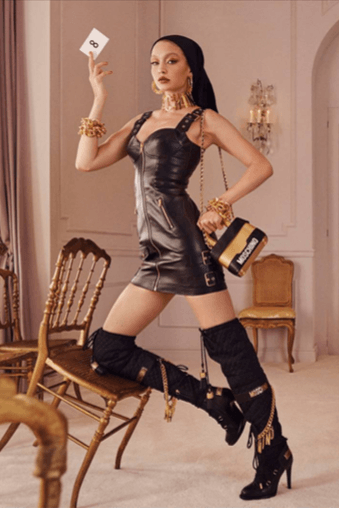
XR technology has unlocked a new level of creative freedom. In fashion, for example, it allows us to create dreamlike environments that would be impossible to build physically. A model can walk through futuristic cityscapes or surreal landscapes, all while staying in the controlled environment of a studio.
Beyond aesthetics, XR is also transforming workflows. Artists can pre-visualize entire concepts, refine them in real time, and see their ideas come to life without the constraints of traditional production. This flexibility not only reduces costs and timelines but also opens up new possibilities for creative exploration.
As generative AI becomes more integrated into production workflows, the potential for XR storytelling is expanding even further. AI can rapidly generate photorealistic environments or fine-tune campaign visuals, allowing creators to focus more on the story itself. Together, these technologies are reshaping what is possible in visual storytelling.
Votion blends high-tech production with creative services for brands and artists. How do you navigate client expectations and budget constraints while pushing the boundaries of XR innovation?
Navigating client expectations and budget constraints starts with understanding their priorities. Every project has unique goals, and it’s important to align on what matters most—whether that’s creative ambition, efficiency, or cost control.
Technologies like XR and generative AI have been instrumental in finding that balance. For example, AI allows us to prototype ideas quickly and generate detailed visuals, which saves time and resources. XR removes the need for traditional sets and locations, offering clients more flexibility in how they allocate their budgets.
At the heart of it, collaboration is key. We’re transparent about what’s possible within a given budget and work closely with clients to design workflows that maximize both impact and efficiency. By combining innovation with practicality, we’re able to deliver creative solutions that meet their needs while pushing boundaries.
AI and virtual production are reshaping the creative landscape. Where do you see these technologies taking Hong Kong’s fashion and entertainment industries in the next five years?
In the next five years, I see fashion and entertainment becoming even more integrated with virtual and AI-driven technologies.
Fashion brands will increasingly prototype collections digitally, experimenting with endless variations before producing physical garments. AI will also play a major role in creating immersive digital assets that allow brands to engage with audiences in entirely new ways. In entertainment, filmmakers will rely on AI to visualize concepts, generate environments, and refine ideas faster than ever before.
Hong Kong has the potential to play a significant role in this transformation. With its unique blend of culture, creativity, and commerce, the city is well-positioned to become a hub for innovative content creation. By embracing these technologies, Hong Kong can continue to grow its influence on the global creative stage.
View this post on Instagram
What’s the most exciting technological advancement you’re exploring right now?
Generative AI is one of the most exciting advancements we’re exploring, and we’re already working on productions that are created entirely using AI.
For example, we’re leveraging AI to design virtual environments, refine visual concepts, and even assist with character development and animation. These tools allow us to produce fully realized projects faster while staying adaptable to creative changes.
What’s particularly exciting is how AI is redefining collaboration. It’s enabling artists, technologists, and storytellers to work together in ways that weren’t previously possible, breaking down traditional barriers between disciplines. I’m always drawn to projects and ventures that explore this convergence of creativity and technology, as they represent the future of storytelling.
As you expand into Mainland China and beyond, what’s your ultimate vision for Votion Studios in redefining global creative production? What’s next for Votion?
My vision for Votion is to contribute to a global creative ecosystem where technology and artistry work hand in hand to redefine storytelling. Expanding into Mainland China and beyond is an opportunity to build bridges between cultures and foster new creative collaborations.
The goal is not just to deliver innovative projects but to help shape the future of creative production. This means investing in education, research, and AI-driven workflows that empower the next generation of creators.
Ultimately, I believe the best stories are yet to be told. By staying curious and open to new possibilities, I hope to continue exploring ventures that combine technology, creativity, and entrepreneurship. The opportunities ahead are endless, and I’m excited to collaborate with those who share a passion for building what’s next.

Editor
Matt ChauCredit
Lead image: @votionimage via Instagram